 Remediate RenovationBay Area and Dallas–Fort Worth · 24/7, a person answers
(281) 671-7777

Don't Wait—Call Remediate.
Hardwood floor water damage repair
Remediate Renovation repairs hardwood floor water damage in the San Francisco Bay Area and Dallas–Fort Worth, from the first moisture reading to the new boards; a person answers 24/7. A leak has reached your wood floor. The boards may be curling at the edges, darkening along the seams or giving underfoot, or they may look normal while the layer beneath them holds the water. Here is how the repair works: how the floor is checked, what decides between drying and replacing, how dry the base has to be, and how the floor goes back down.
- A person answers 24/7
- Insured
- Drying and new floor, one company
- Free consultation and quote
What you may be seeing
What are the signs of water damage in a hardwood floor?
Wood swells as it takes on moisture and shrinks as it dries out. The National Wood Flooring Association names cupping as the classic sign of a floor that has gained moisture: each board's edges sit higher than its middle. A wet floor can show it in other ways too.
Cupped or lifting boards
Edges rising across the width of each board, or whole boards pushing up where they meet a wall or a doorway because they have swollen into each other.
Dark seams and stains
Grey or black lines along the joints, or a dark patch near a dishwasher, a sink, a fridge water line or an outside door.
Soft spots and a damp smell
A board that gives or squeaks where it never did, or a musty smell close to the floor. Both point at the layer under the wood, not the finish on top.
None of them shows how far it went
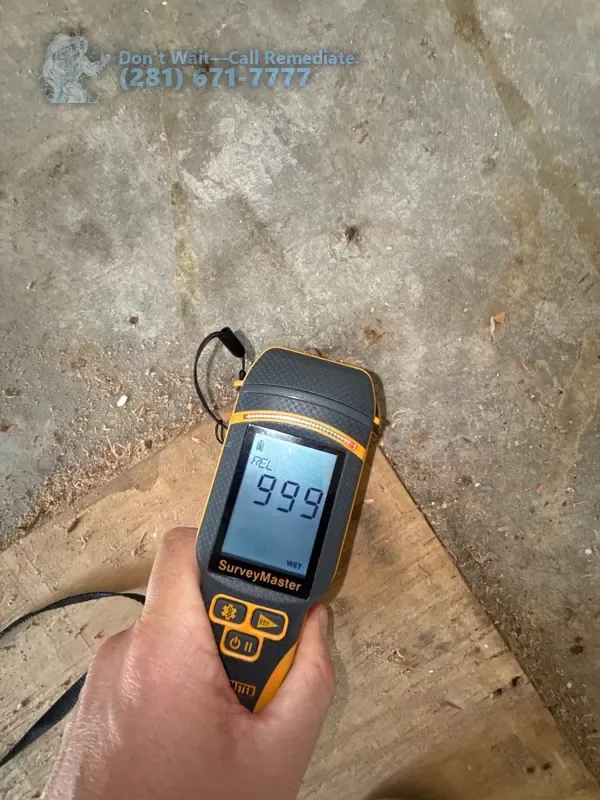
A sign tells you water got in. Only a moisture meter, in the boards and in what is under them, tells you where it is now. That reading comes before any decision about the floor.
Under the boards
Slab or crawl space: why the base under the wood matters
Two houses with the same oak floor can need very different work, because the water ends up in different places.
Wood over a concrete slab
Water that reaches the slab spreads sideways under the boards and has nowhere to drain. The concrete holds it long after the surface looks dry. A pipe leaking under the slab can wet a floor from below with no spill in sight; slab leaks are part of our water work.
Wood over plywood and a crawl space
Here the boards sit on a plywood or plank subfloor over joists, and water can drip through into the crawl space below. Crawl space water and drying is part of the job too, or the damp underneath keeps feeding the floor above.
Solid, engineered or floating
Solid hardwood is wood all the way through. Engineered flooring has a thinner wood top layer over plies, so there is less to sand. A floating floor rests on an underlayment that can trap water beneath it. Each one changes what can be kept.
Keep it or replace it
What decides between drying the floor and tearing it out?
The answer comes from the house, not from a rule of thumb. These are the things that settle it.
How long it stayed wet
The EPA says mold can grow on wood that stays wet for more than 24 hours. A slow leak found late has had far longer than that.
Where the water is
Water in the boards alone is a different job from water in the subfloor or on the slab. Drying the top does nothing for what sits underneath.
What kind of water
A clean supply line is one thing. Water that came up a drain is category 3, and that work follows our sewage cleanup page.
Whether mold has started
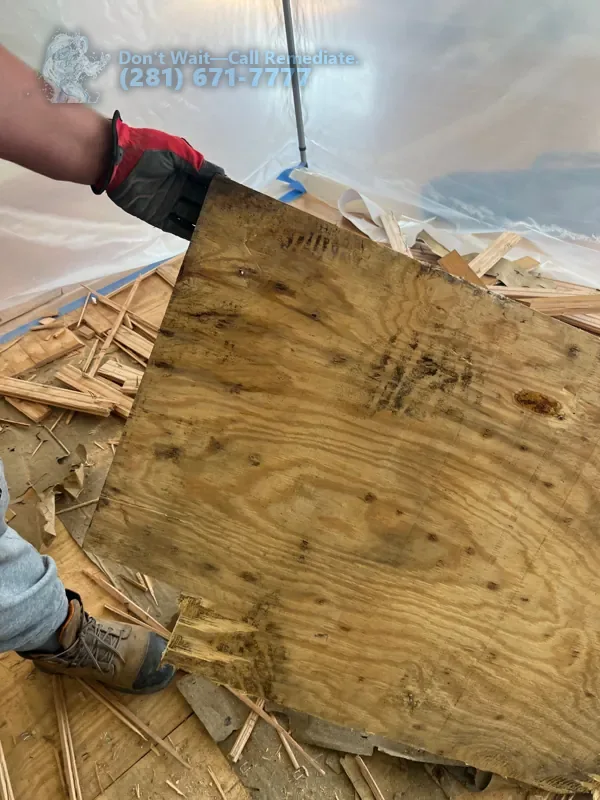
If it has, everything the mold touched is replaced with new material, never cleaned and reused. Wood that grew mold underneath comes out.
How the floor is built
How it was fastened, how thick its wear layer is and whether it floats all change what drying can save.
The record behind the choice
Photos and moisture readings show why the floor was dried in place or why it came out, for you and for the adjuster.
For the homeowner's side of this question, our post Can a wet hardwood floor be saved? walks through it with the Fremont floor as the example.
A real job in Fremont, 2026
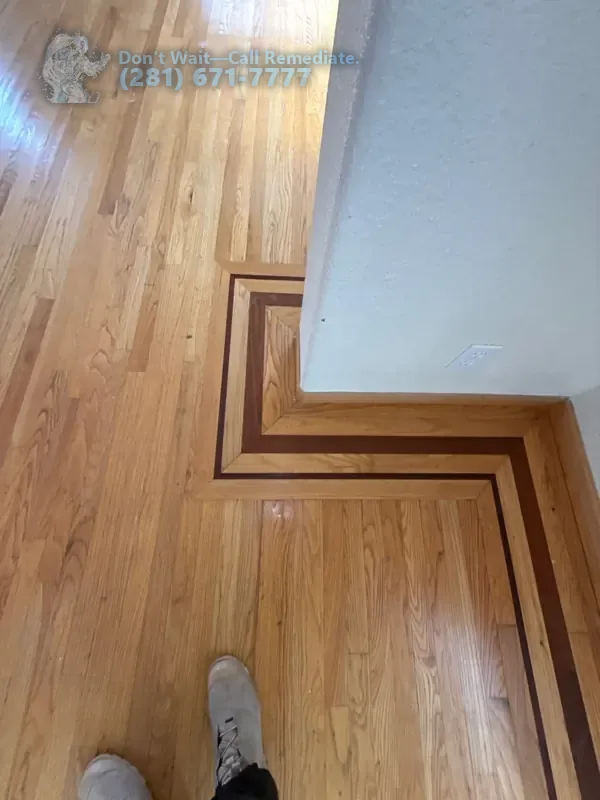
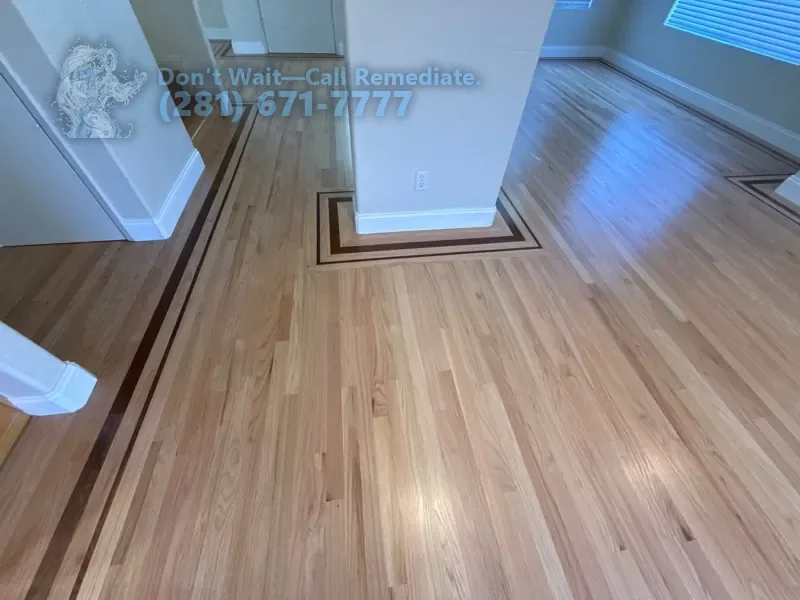
An oak floor with an inlay border, taken up and laid again
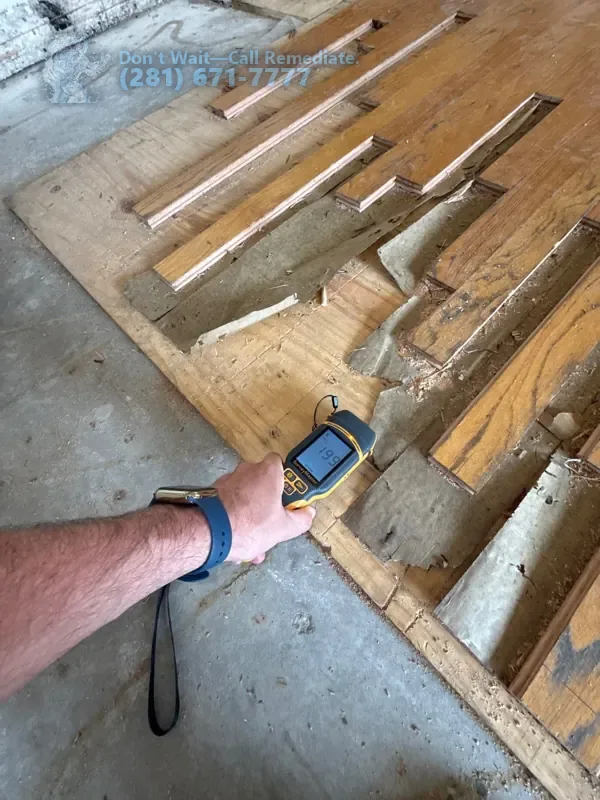
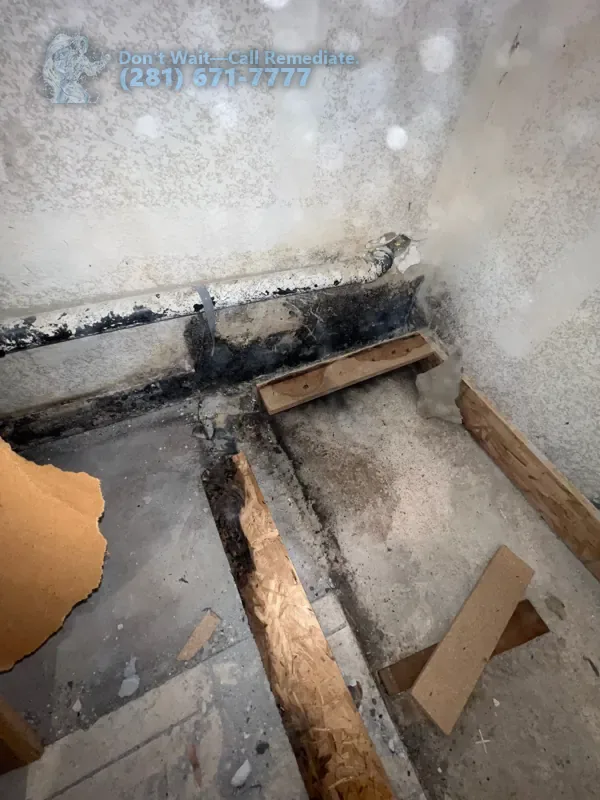
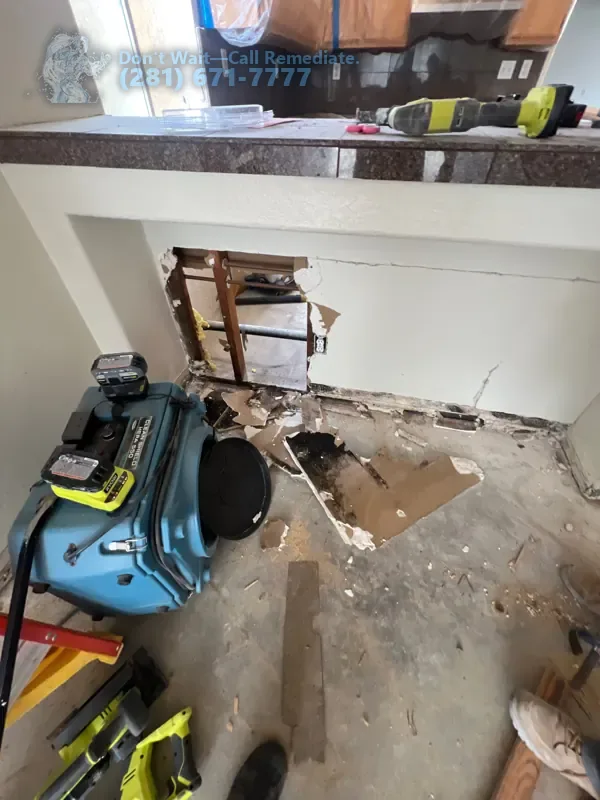
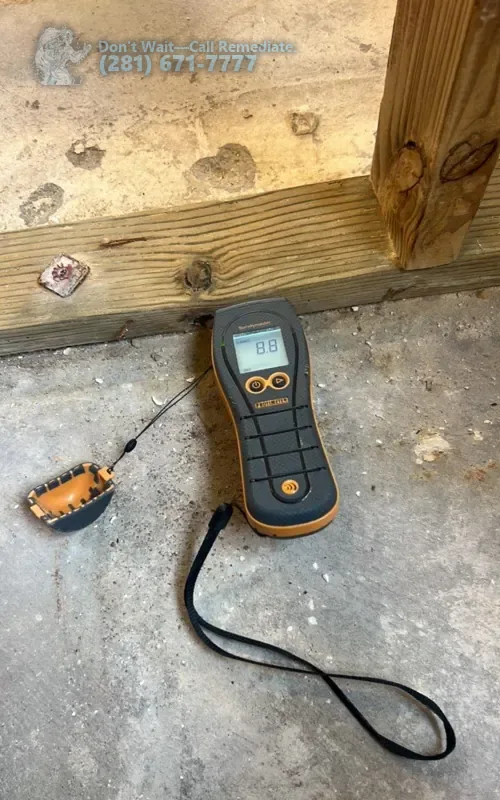
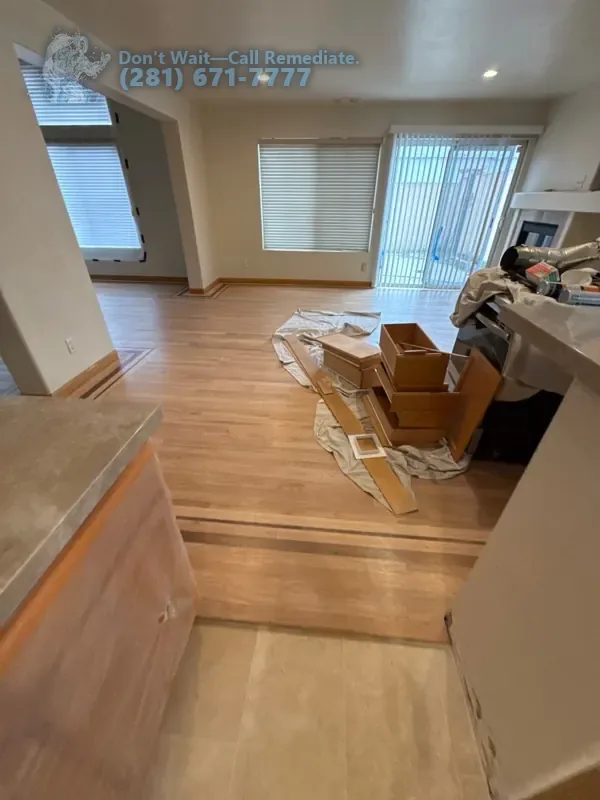
This floor looked normal from the doorway. Under it the meter hit the top of its scale, and there was mold beneath the wood, so the boards and subfloor came out to the slab, the slab was dried and read, and new hardwood went down with the border.
All 9 photos, one by one
How it goes
From the wet floor to the finished one
Read
Moisture readings in the boards, the subfloor or slab, and along the walls and cabinets, before anything is lifted.
Open up
Containment around the room, then the wet or moldy wood and subfloor come out, down to what is sound.
Dry
Air movers and dehumidifiers on the open floor, read again at each visit until the base is dry.
Lay the new floor
New hardwood, with any inlay or border laid again, then sanding and finish to blend with what stayed.
The first consultation and quote are free.
Before new wood goes down
How dry is dry enough for a new hardwood floor?
Laying wood over a damp base is how a repaired floor cups all over again. The EPA's flood cleanup guidance gives two plain tests and one warning.
Source: EPA, Flood Cleanup to Protect Indoor Air and Your Health, updated March 18, 2026. On our Fremont job the slab was read again before the new floor went in.
The rebuild
Putting the hardwood floor back
Hardwood floors and inlays are part of our construction work, so the company that dried the room also lays the new floor. There is no gap between a drying crew leaving and a flooring installer finding a date.
Matching what stayed
Species, board width, the direction the boards run and the finish on the rest of the house decide how close new wood can come. Settle the match before the wood is ordered.
Borders and inlays
A border or inlay that came out with the wet boards can be laid again. On the Fremont floor the dark border went back around the room and the column.
What else came up
Baseboards, cabinet toe kicks and the lower edge of drywall often come off with a wet floor. They go back as part of the rebuild after damage.
Cost and planning
What moves the price, timing and the claim
What moves the price
How much floor came out, solid or engineered wood, whether the subfloor or slab needed work, whether mold was found, and borders, inlays or stairs in the new floor.
Timing
The new floor goes down when the readings say the base is dry, not on a date set before the drying started.
Insurance
For a covered repair you pay only your deductible; your insurer pays us the rest directly. Upgrades you choose, such as a different wood, are priced separately.
The first consultation and quote are free. Our work comes with a written warranty, its terms set in your contract, and financing is available through our lending partner.
Related water and floor services
- Water damage mitigationThe first visit when water is anywhere in the house.
- Can a wet hardwood floor be saved?Our post on keeping or replacing it.
- The Fremont jobEvery stage, with all the photos.
- Mold remediationWhen mold grew under the boards.
- Rebuild after damageTrim, cabinets and walls back after the floor.
Where we repair water-damaged hardwood floors
We take hardwood floor water damage jobs in the San Francisco Bay Area and in Dallas–Fort Worth. See the cities we have worked in.
Questions
Hardwood floor water damage questions
My hardwood floor is cupping after a leak. Should I sand it flat now?
Not yet. Cupping shows the boards took on water, and a floor sanded flat while it is still wet can end up uneven again once it dries. First the water source is stopped and the floor and what is under it are read with a moisture meter; the choice to sand, repair or replace waits until the readings say dry.
How dry does the slab or subfloor have to be before new hardwood goes down?
Dry by the meter, not by the calendar. The EPA says flooring should read 15 percent or less on a moisture meter before it is refinished, and it describes a simple slab check: tape clear plastic to the concrete, wait about 16 hours, and if moisture shows on the plastic the slab is still too wet. Nothing new goes down over a base that still reads wet.
Can you match the rest of my floor when only one room comes out?
Often, but it depends on what stays. The species, the board width, the direction the boards run and the finish on the rest of the floor decide how close new wood can come. We install hardwood floors and inlays as part of the rebuild; on our Fremont job the inlay border was laid again with the new boards. Settle the match before the wood is ordered.
Is hardwood floor water damage part of my insurance claim?
Coverage is between you and your policy. We document the floor for the claim: photos, moisture readings and measurements, and a line-item estimate in the industry's standard estimating format. For a covered repair you pay only your deductible; your insurer pays us the rest directly. Upgrades you choose, such as a different wood, are priced separately.
Don't Wait—Call Remediate.
Tell us about the floor
Which room, what the boards look like, and where you think the water came from. We call you back, or call us now.
Call (281) 671-7777