 Remediate RenovationBay Area and Dallas–Fort Worth · 24/7, a person answers
(281) 671-7777
Blog · October 21, 2026 · Water damage
Water-damaged hardwood floor: can it be saved?
Sometimes. Whether a wet hardwood floor can be dried and kept depends on three things: how long the water sat, whether it went through the boards into the subfloor, and whether mold has started. You can't judge any of the three by looking at the top of the boards, so the first step is always a moisture reading, not a guess.
What decides it
Wood takes on water and swells. The National Wood Flooring Association describes the most common sign: when a floor gains moisture it can cup, which means the edges of each board rise above its center. Cupping tells you the boards have taken on water. It does not tell you how far the water went.
That is the part that decides the job. Water that stays on top of the finish and is wiped up quickly is a different problem from water that runs between the boards and soaks the layer underneath. Once the subfloor is wet, the boards sit on a wet surface, and drying the top of the floor does nothing for what is below it.
Time matters just as much. The EPA's guidance is to dry water-damaged areas and items within 24 to 48 hours to prevent mold growth. A floor that has been wet for longer than that, or that was wet underneath without anyone knowing, is where mold becomes the question.
Why a floor can look fine and still be wet
The top of a hardwood floor has a finish on it. It is the last part of the floor to show water and often the first part to dry. Underneath, the boards and the subfloor can hold water for a long time with nothing to see from above.
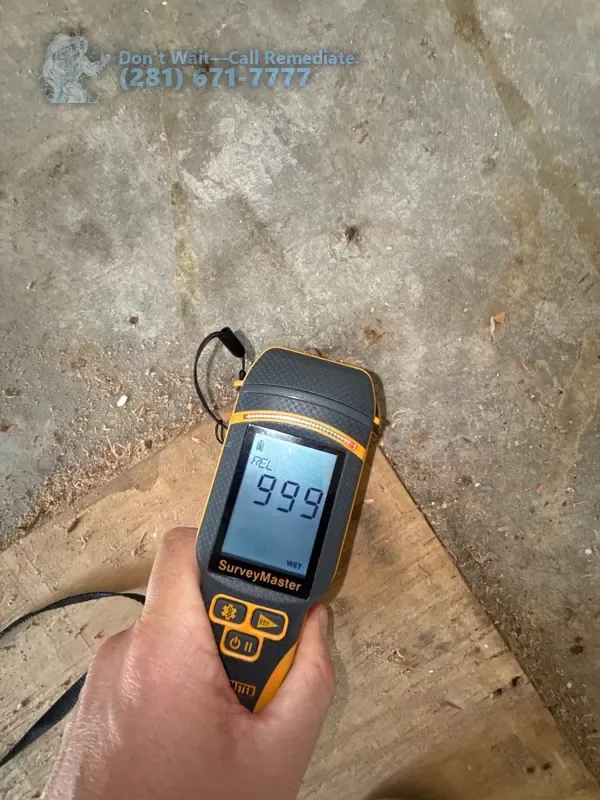
That is exactly what we found on a job in Fremont. From above, the floor looked fine. The first thing we did was read moisture under the floor before touching anything, and under the boards the meter went to the top of its scale. The water was there; it just wasn't visible.
So when a homeowner asks us whether a floor can be saved, we don't answer from the doorway. We take readings in the boards and in the subfloor beneath them, along the walls and the cabinets where water tends to run, and we decide from the numbers.
What happened on one real job
On the Fremont job, the readings and what we found under the boards settled it. Plastic walls went up to close off the work area from the rest of the house. The wet hardwood and the subfloor under it came out, down to the slab. There was mold under the floor, and it came out with the wet wood.
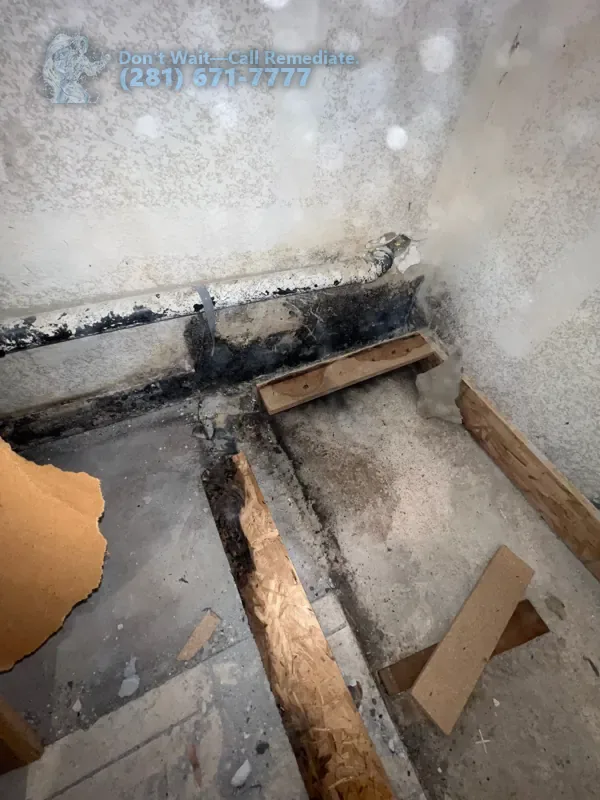
Then the slab dried. Air movers ran over the open floor from March 26 to March 30, and we kept taking readings on the slab before anything was closed up. A new floor laid over a wet slab would trap the water under it, so nothing goes back down until the readings say dry.
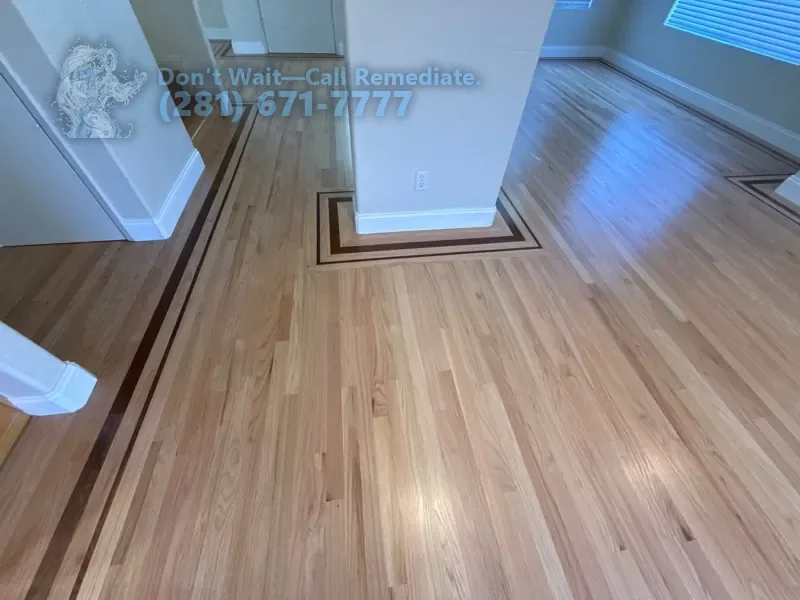
The rebuild came next. New hardwood went in, and the dark inlay border the owner had before was laid again. The counter next to the floor got a new countertop and backsplash, with the cabinets wrapped while that work finished. By September the floor was finished and the kitchen was open again.
In that house the answer was no: the floor could not be kept, because the water had gone through to the subfloor and mold had grown underneath. The whole job, stage by stage with every photo, is on the Fremont job page.
What you can do in the first hours
Shut the water off if you can reach the valve safely, and keep people away from wet floors near outlets. Soak up standing water on the surface so it doesn't keep running into the seams between the boards. Then call, because the clock the EPA describes starts when the water arrives, not when the floor starts to show it.
What helps most at that point is a reading. On our first visit we read moisture before we move anything, so the decision about the floor is made on what the meter shows. What happens on that visit, step by step, is on our water damage mitigation page.
When replacing beats drying
Mold changes the answer. The EPA notes that porous materials that become moldy may have to be thrown away, because mold can grow into the spaces in the material and be impossible to remove completely. Our own rule is simpler and has no exceptions: everything the mold touched is replaced with new material, never cleaned and reused.
That is why the Fremont floor came out instead of being dried in place. Drying would have dealt with the water. It would not have dealt with what had grown under the boards. If mold is part of what we find, the plan is the one on our mold remediation page: contain it, take out what it touched, dry the structure, and put new material in.
Replacing doesn't have to mean losing the look of the floor. Hardwood floors and inlays are part of the rebuild work we do, and on the Fremont job the inlay border went back in with the new boards.
If insurance is involved
Coverage is between you and your policy. Our part is the documentation: photos, moisture readings, and line-item estimates in the industry's standard estimating format, starting with the readings on the first visit. Those readings are also what show why a floor was dried or why it came out. More on that is on how we work with your insurance company.
Questions about wet hardwood floors
How do I know if water got under my hardwood floor?
Often you can't tell by looking. A floor that feels soft, starts to cup or smells damp is a sign, but on our Fremont job the floor looked fine and the meter under the boards still went to the top of its scale. A moisture reading under the boards, and in the subfloor below them, is the only way to know.
How fast does a wet floor need to be dried?
The EPA's guidance is to dry water-damaged areas and items within 24 to 48 hours to prevent mold growth. For a floor, that clock is about the wood and the subfloor under it, not only the surface you can wipe.
If mold grew under the floor, can the boards be cleaned and kept?
Not on our jobs. Everything the mold touched is replaced with new material, never cleaned and reused. The EPA notes that porous materials that become moldy may have to be thrown away, because mold can grow into the spaces in the material.
Sources
- EPA, A Brief Guide to Mold, Moisture and Your Home (updated February 18, 2026): drying within 24 to 48 hours; moldy porous materials.
- National Wood Flooring Association, Problem prevention: wood gains moisture and can cup; what cupping looks like.
- Our own job: Fremont, March to September 2026, readings and photos from the site.