 Remediate RenovationBay Area and Dallas–Fort Worth · 24/7, a person answers
(281) 671-7777
Blog · October 24, 2026 · Kitchen remodeling
Living through a kitchen remodel: what the weeks look like
Most of the time you can stay in the house. The kitchen is closed off behind plastic walls and the rest of the home stays in use. What changes is how you cook, where you wash dishes and how you move around the work. Settling those three things before tear-out day makes the weeks far easier.
Can you stay in the house during a kitchen remodel?
Usually yes. A kitchen is one room, and the work can be closed off from the rest of the house. Bedrooms, living room and bathrooms stay yours, and the crew works on the other side of the plastic.
There are a few cases where a short stay somewhere else is the easier choice. When the kitchen and the only bathroom are both open at the same time, daily life gets hard. When someone at home has breathing trouble, a newborn, or works nights and sleeps during the day, the dust and noise of the tear-out days matter more. Those are worth saying on the first visit, because they change how the work is ordered, not only where you sleep.
The noisiest, dustiest part is the start: old counters, cabinets and flooring coming out. After that the work gets quieter and cleaner, and the kitchen starts to come back together piece by piece.
Set up a temporary kitchen before tear-out day
The one thing that helps most is a small kitchen somewhere else in the house, set up before the old one comes apart. A dining room, a corner of the living room or the garage all work. What it needs:
- The refrigerator, moved out of the work area and plugged in where you can reach it. The FDA advises keeping the refrigerator at or below 40 degrees F, and a fridge that was unplugged for the move needs time to cool down again before it is filled.
- A table and an outlet. A microwave, an electric kettle, a toaster oven or a slow cooker cover most meals. Plug them into different outlets rather than one power strip, so you are not tripping a breaker every morning.
- A short list of easy meals. Things that heat in one appliance and clean up in minutes. Paper plates for the first days cut the dishwashing down to almost nothing.
- A bin for the kitchen basics. Coffee, a knife, a cutting board, dish soap, a sponge and a few containers. Everything else can be packed away.
Food safety is easy to forget when the routine is broken. The FDA's two-hour rule applies to anything that should be refrigerated: don't leave it out at room temperature for more than two hours, or one hour when the air is above 90 degrees F. Dinners eaten on the couch and leftovers left on a side table are exactly how that slips.
Never cook with a camp stove or grill inside
This one is about safety, not comfort. The CDC warns against using gas or charcoal grills, camp stoves or similar devices inside the home, in basements or in garages, because the fumes are deadly. A camping burner on the dining table feels like a clever fix and is not. If you want to grill, do it outside and well away from windows and doors. Inside, stick to plug-in appliances.
Dishes without a kitchen sink
The sink is usually one of the first things to go, and it comes back late, once the new counter is in. For the weeks in between, a laundry sink is the easiest place to wash up. A bathroom sink or tub works for a few plates, with a strainer over the drain so food doesn't clog it. A dish rack on a towel next to your temporary kitchen keeps it all in one place.
Fewer dishes is the real answer: one pot, one pan, one set of plates per person, and paper for everything else during the messiest days.
How the dust stays in the kitchen
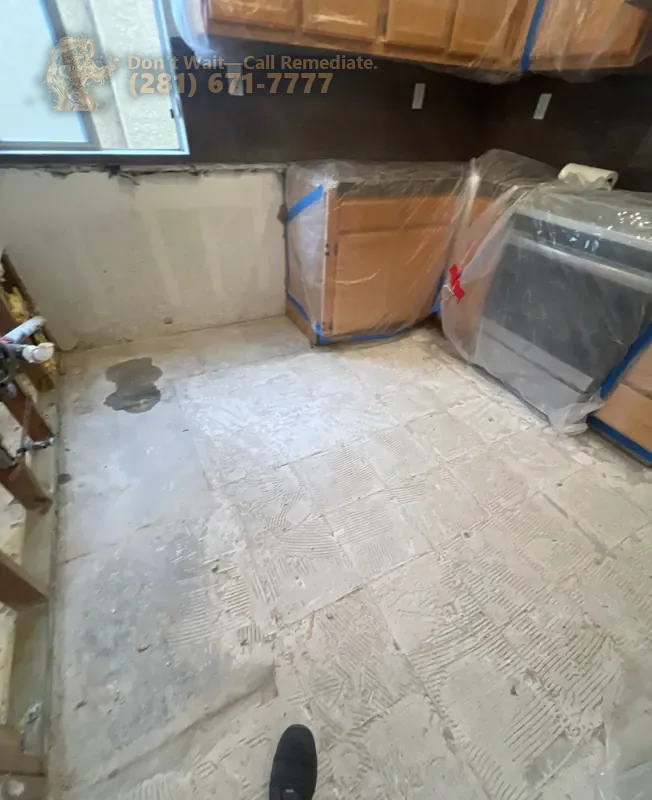
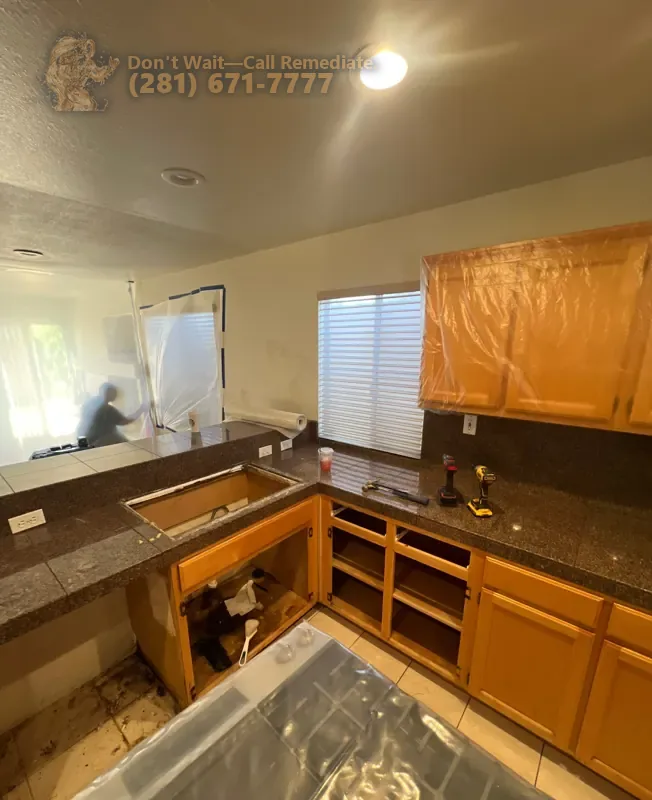
Before anything comes out, plastic walls go up to close off the kitchen from the rest of the house. Cabinets that are staying are wrapped, and so are appliances that stay in the room. On the Fremont job in the photo above, the appliances were wrapped in plastic while the floor and lower wall were open, and the cabinets were wrapped while the new countertop and backsplash went in.
The air system is the other path dust can take. The EPA's advice during construction or renovation is to seal off the supply and return registers and not run the heating and cooling system until the dust is cleaned up. Ask how that will be handled in your house before the tear-out starts, especially if the return vent is near the kitchen.
If dust gets into the ducts anyway, cleaning them after the remodel is something we do, and it can be the last step of the same job. Why it makes sense, and when it doesn't, is in our post on air duct cleaning after mold or smoke; remodel dust follows the same logic.
Kids, pets and the work zone
A plastic wall is not a door. Children and pets see a new room to explore, and a kitchen in the middle of a remodel has open walls, tools, cut edges and missing floor. Agree on one rule for the whole family: nobody goes past the plastic while the work is going on. A baby gate in front of the zipper door, and pets kept in a back room on the loudest days, make that rule easier to keep.
It also helps to know which door the crew uses and where materials are stored, so the path through the house stays clear for you.
What happens, in order
Every kitchen is different, but the order rarely changes. Knowing it tells you which weeks are the hard ones.
- Design and plans. Layout and finishes are chosen first; design is part of our work, and we handle the plans and permits. The first consultation and quote are free.
- Tear-out behind plastic. The loudest and dustiest stretch.
- The build. What sits behind the walls and under the floor, then cabinets.
- Counters and backsplash. The counter usually comes once the cabinets are set, and the sink and cooktop go into it.
- Floor and finish work. The last details before the room is yours again.
A permitted remodel also has inspections along the way, and some steps can't start until an inspection is done. That is normal, and it is worth knowing so a quiet day doesn't feel like a stalled job.
When the remodel follows water damage
Some kitchen remodels start with a leak under the sink or behind the dishwasher. Then there is one more step before the build: the wet material comes out and the structure dries, and the rebuild starts only when the moisture readings say dry. Building over wet material traps the water under the new kitchen.
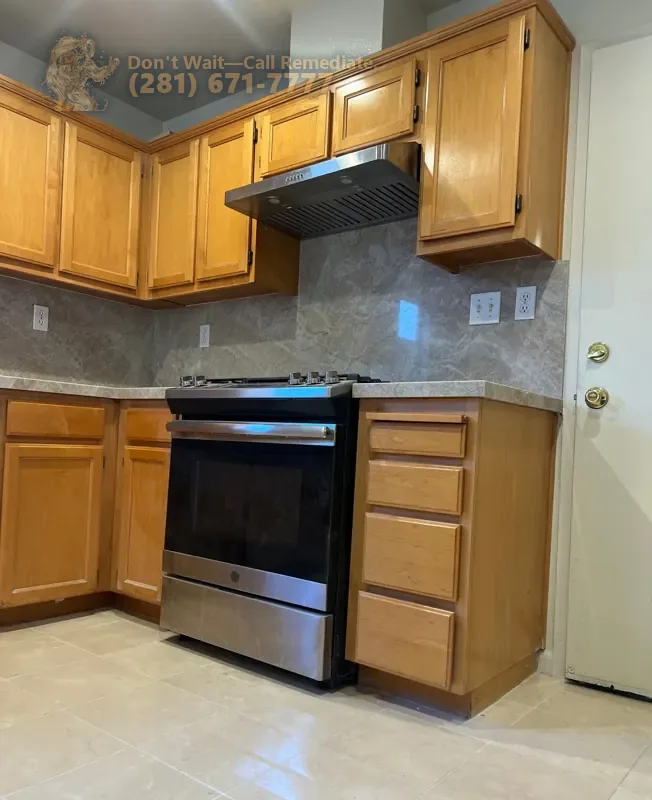
That is what happened on the Fremont job. Water had gone under the floor, and mold was found under it, so the wet wood came out and everything the mold touched was replaced with new. Once the readings said dry, the kitchen was rebuilt with new stone counters, a new backsplash and a new floor.
When insurance is involved, we document the loss for the claim with photos, moisture readings and line-item estimates in the industry's standard estimating format. Coverage is between you and your policy. Every stage of that job is on the Fremont job page.
What to settle before work starts
- Where the temporary kitchen goes, and who moves the refrigerator.
- Which bathroom stays usable the whole time.
- Which door the crew uses, and where materials are kept.
- What happens with the heating and cooling system during the dusty days.
- Who at home needs extra care around dust or noise, and whether a few nights away make sense.
- Who you call with a question during the job. With us, it is the same number from the first visit to the last day.
What a kitchen remodel with us can include, from counters to floors to islands, is on our kitchen remodeling page. If the kitchen is one of several rooms, see whole-home remodeling.
Questions about living through a kitchen remodel
Do I have to move out during a kitchen remodel?
Usually not. The kitchen is closed off behind plastic walls and the rest of the house stays in use. A short stay elsewhere makes sense when the kitchen and the only bathroom are open at the same time, or when someone at home cannot be around dust and noise. We plan that with you before the work starts.
How do I cook during a kitchen remodel without a kitchen?
Set up a small temporary kitchen in another room before tear-out day: the refrigerator, a microwave, a kettle and a plug-in cooker, on a table near an outlet. Keep the fridge at or below 40 degrees F, as the FDA advises. Never cook indoors on a camp stove or grill; the CDC warns about carbon monoxide.
How do you keep kitchen remodel dust out of the rest of the house?
Plastic walls go up around the kitchen before anything comes out, and cabinets and appliances that stay are wrapped while the work goes on. The EPA also advises sealing the supply and return registers and not running the heating and cooling system until the dust is cleaned up.
Should the air ducts be cleaned after a kitchen remodel?
Only if remodel dust got into them. If dust comes out of the vents once the system runs again, cleaning the ducts after the remodel is part of what we do, and it can be the last step of the same job.
Sources
- FDA, Are You Storing Food Safely? (content current as of January 18, 2023): refrigerator at or below 40 degrees F; the two-hour rule. Official.
- CDC, Safety Guidelines: During and After a Winter Storm (reviewed August 25, 2026): no grills or camp stoves inside the home, basement or garage. Official.
- EPA, Should You Have the Air Ducts in Your Home Cleaned? (updated February 19, 2026): seal registers and keep the system off during renovation dust. Official.
- Our own job: Fremont, March to October 2026, photos from the site.