 Remediate RenovationBay Area and Dallas–Fort Worth · 24/7, a person answers
(281) 671-7777

Don't Wait—Call Remediate.
Restoring and rebuilding Fremont homes
We have done 13 jobs in Fremont, the first in March 2024 and the latest in October 2026. This page is what we know about the houses there, and what the city's own records say about them.
Our record in the city
13 jobs in Fremont, March 2024 to October 2026
Thirteen times since spring 2024, someone in Fremont called us about their house. Our photo log holds every one of those jobs, more than six thousand photos in all, taken from the first visit to the last.
What we do
Water mitigation, mold remediation, fire and smoke cleanup, air duct cleaning, the rebuild once the damage is handled, and construction and remodeling. One call covers the whole job, from the first reading to the finished room. Our records count the Fremont jobs; they do not sort them by type, so we do not claim here which of these each one was.
What you can see
Photos from a job go on this site only once they are cleared for publishing. One Fremont job is cleared so far: a hardwood floor that looked dry and was not. Its photos are below, with the dates they were taken.
From one real job: Fremont, 2026
The Fremont job you can look through
March 13, 2026: the boards looked fine, and the meter under them read the top of its scale. The wet hardwood and subfloor came out down to the slab, mold found under the floor came out with the wood, and the slab was read again before anything new went down. In August the new floor went in with its inlay border laid again.
All 8 photos, one by one
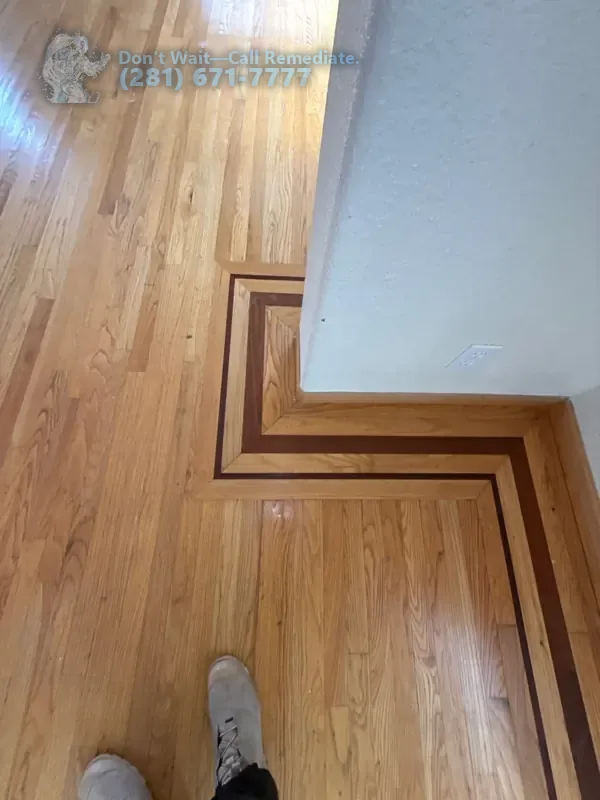
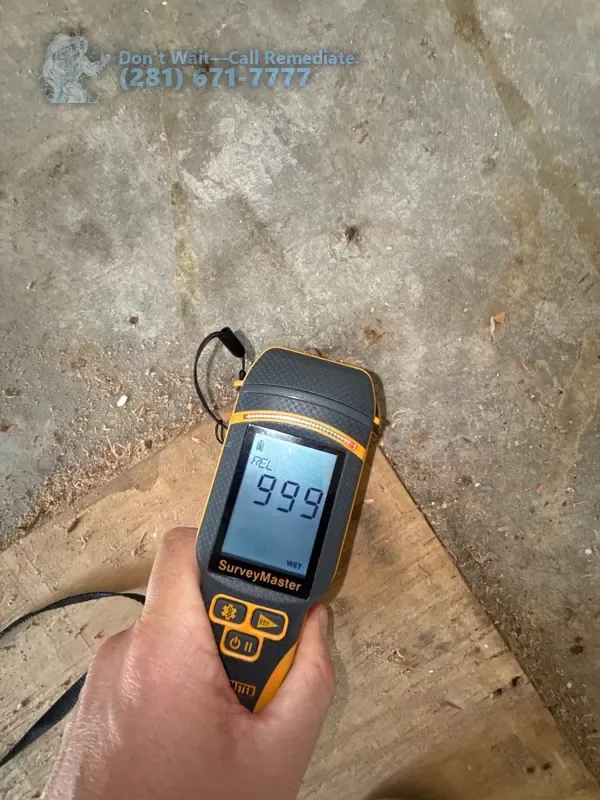
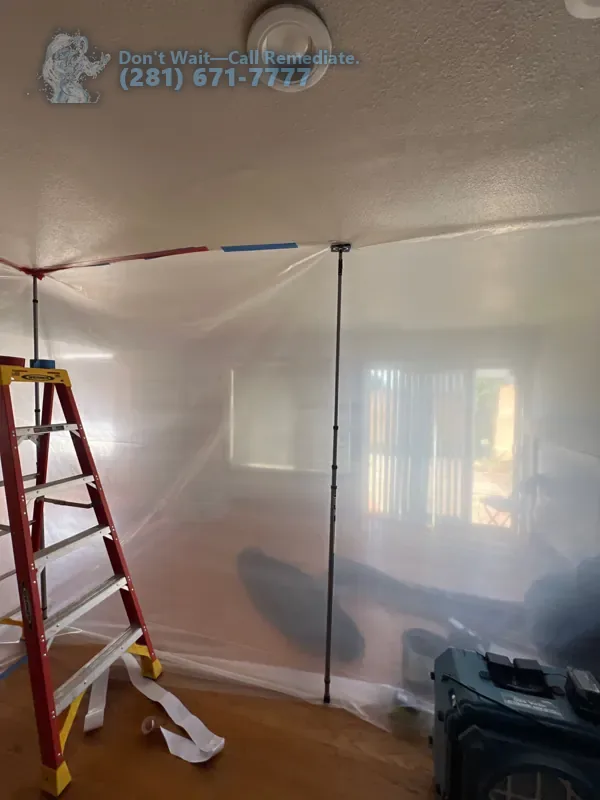
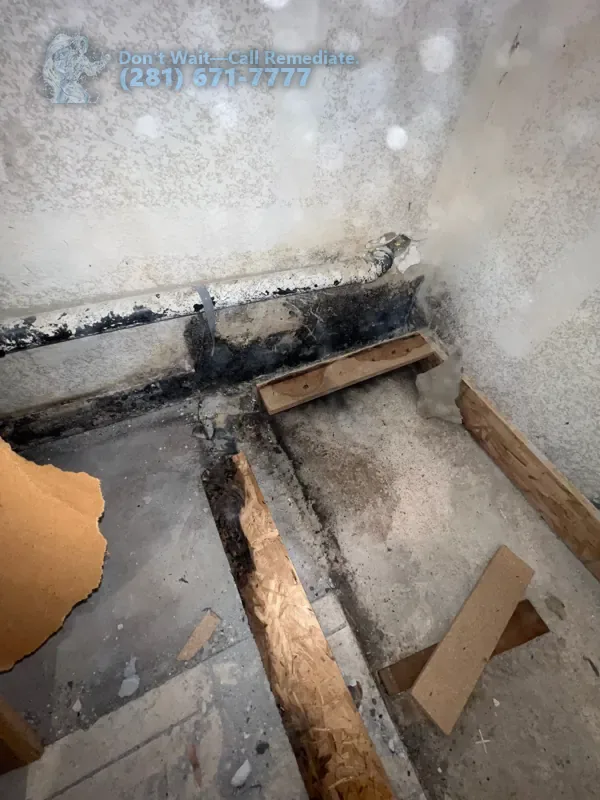
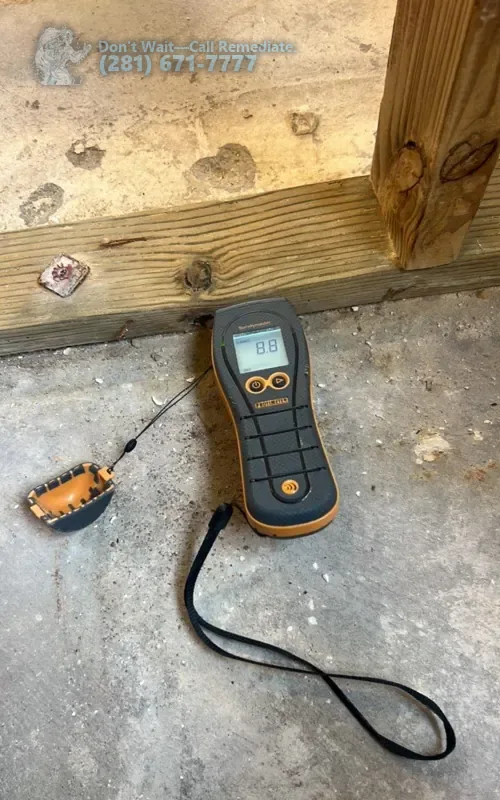
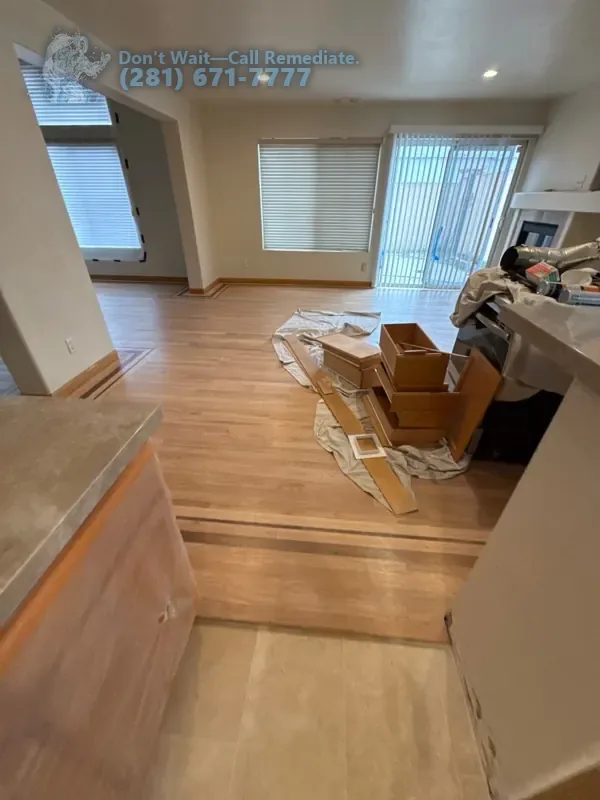
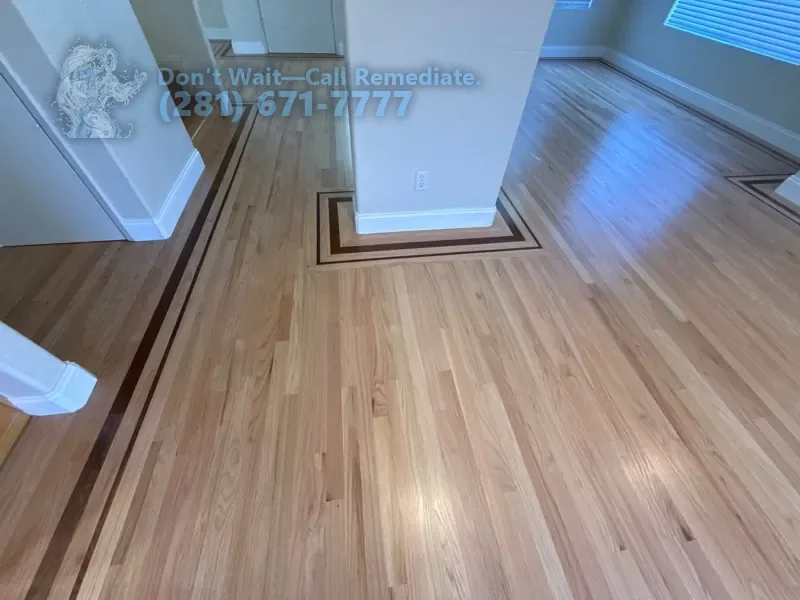
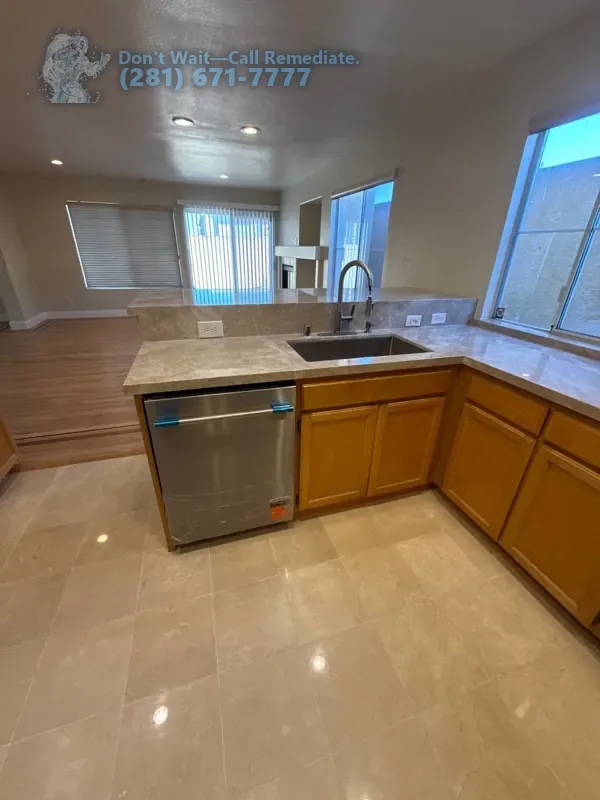
The whole job, step by step: water under a hardwood floor in Fremont.
Housing age
Half of Fremont's homes were built before 1980
The U.S. Census Bureau's American Community Survey (2020–2024 estimates) puts the median year Fremont's homes were built at 1979, give or take one year (table B25035). Of about 81,600 housing units it counts, roughly 43,100, or 53 percent, went up before 1980 (table B25034).
The 1960s and 1970s
The 1970s is the biggest single decade in the count, about 18,600 homes, and the 1960s adds about 13,800 more. Only about 7,200 were built in 2010 or later. More than half of Fremont's houses have had forty-plus years to age.
What age means for water
An older house has older supply lines, older shower pans and older water heater connections, and it has usually been remodeled once or twice over the original work. When water gets in, it often runs under layers added years apart, which is why we read moisture under the finish before deciding what comes out.
Mold behind old finishes
A slow leak can sit behind a vanity or under a floor for a long time before anyone sees it. If mold has started, everything the mold touched is replaced with new material, never cleaned and reused.
Paint in homes from before 1978
The U.S. EPA's Renovation, Repair and Painting rule covers work that disturbs paint in homes built before 1978. With a median build year of 1979, a large share of Fremont homes fall under it, so ask any contractor how they handle it before walls are opened.
City permits
What Fremont's permit office asks for a rebuild or remodel
The City of Fremont's Planning and Building Permits page says every permit requires a building inspection, and permits are applied for through Citizen Access, the city's online portal. Its permit types page sorts the work like this.
Express permits for limited work
Issued automatically online for a narrow scope: a kitchen or bath remodel that does not remove or alter any walls, window replacement that leaves the framing alone, a water heater or water line replaced in the same spot, or a reroof of more than 100 square feet.
A general building permit for repairs
Residential alterations and repairs, additions and demolition go through the regular building permit. A rebuild that moves walls or changes framing after water or fire damage is this kind of work.
The historic evaluation for older properties
Fremont requires a Historic Evaluation Request for properties that have reached half a century of age before permits for demolition, relocation or exterior modifications. With so many homes from the 1960s and 1970s, this comes up often.
Sewer lines past two feet
The city permits sewer lines and cleanouts up to two feet from the building's footprint. Beyond that, the Union Sanitary District handles the permit.
For remodels we handle the permits and plans, and design is included. Start at the city's Planning and Building Permits page if you want to look up a permit on your property.
Water from outside
Storm season, flood zones and Alameda Creek
Parts of Fremont are in a FEMA flood zone
The city takes part in the National Flood Insurance Program, and FEMA's Flood Insurance Rate Maps mark some Fremont properties as special flood hazard areas. The city's flood insurance page has an address lookup, and FEMA's own Flood Map Service Center shows the official panels.
This winter
On October 20, 2026, the city posted a Flood Preparedness Week notice citing the National Weather Service: a 75 percent chance that El Niño reaches record levels this year. It asks residents to clear gutters, yards and drains and to trim trees now.
Creeks and storm drains
The city's storm page counts more than 10,400 storm drains in Fremont and warns that creeks in rural areas, including along Niles Canyon Road, can rise fast. Debris in a drain is enough to back water up toward a garage or a door.
When it gets inside
Water that comes in from outside can carry mud and worse, so we photograph and read everything before it is moved, take out what cannot be saved, and dry the structure until the readings say dry. The photos and readings go into your claim file.
Ground and earthquakes
Living on the Hayward Fault
The U.S. Geological Survey's account of the 1868 magnitude 6.8 earthquake traces its surface cracking north from Warm Springs in Fremont, and says the time between large quakes on the southern part of the fault has averaged about a century and a half. The California Geological Survey's Hayward Fault fact sheet adds that the ground creeps a few millimeters a year in spots along the fault, and that mapped zones flag land prone to liquefaction and landslides.
Check your own address
The state's EQ Zapp lets you type in an address and see whether it lies in a mapped fault rupture, liquefaction or earthquake-induced landslide zone. The state requires that zone to be disclosed when a property in it is sold.
Why we mention it
After a quake, one common follow-on is water: a supply line or water heater pulled loose, a pipe cracked inside a wall. The first steps are the same as any leak. Shut the water off at the valve if you can reach it safely, then call.
Who handles what
Who to call in Fremont, and for what
Not every flood is ours to fix. The City of Fremont's storm page lists the phone number for each of these.
A flooded street, sidewalk or storm drain
The city's Maintenance Operations on weekdays; after hours, the Fremont Police non-emergency line.
A water main break
The Alameda County Water District.
Alameda Creek flooding
The Alameda County Flood Control and Water Conservation District.
A sewer emergency in the public line
The Union Sanitary District.
Water, smoke or mold inside your house
That part is ours. Call (281) 671-7777, 24/7; a person answers.
The services behind this page
Questions
Questions Fremont homeowners ask
My Fremont house dates from the 1970s or earlier. Does that change a rebuild?
It can. The City of Fremont requires a Historic Evaluation Request for properties that have reached half a century of age before permits for demolition, relocation or exterior modifications. Interior repairs go through a regular building permit. For remodels we handle the permits and plans, so we check this at the start.
Does a like-for-like kitchen or bath remodel in Fremont need a full building permit?
Not always. Fremont lists an express permit, applied for online through Citizen Access and issued automatically, for kitchen or bathroom remodels that do not remove or alter any walls. Moving or opening a wall needs a regular building permit. Either way, we handle the permits and plans for your remodel.
Storm water came into my Fremont house from outside. Who do I call first?
If anyone is in danger, call 911. A flooded street or storm drain goes to the city's Maintenance Operations, and Alameda Creek flooding to Alameda County Flood Control; the city's storm page lists both numbers. For the water inside your house, call us at (281) 671-7777, 24/7; a person answers.
How do I find out if my Fremont home is in a flood zone or a liquefaction zone?
For flooding, the City of Fremont's National Flood Insurance Program page has an address lookup; a color overlay means an official FEMA flood zone. For earthquake hazards, the California Geological Survey's EQ Zapp shows whether an address sits in a mapped fault rupture, liquefaction or landslide zone.
Is flood insurance cheaper in Fremont?
For some owners. The city says property owners who must buy flood insurance because they are in an official flood hazard area get a 10 percent discount on premiums, earned through FEMA's Community Rating System. Coverage itself is between you and your policy; we document the loss for the claim.
Don't Wait—Call Remediate.
Tell us about your Fremont house
What happened, which rooms, and roughly when the house was built. We call you back, or call us now.
Call (281) 671-7777